Sandwiches
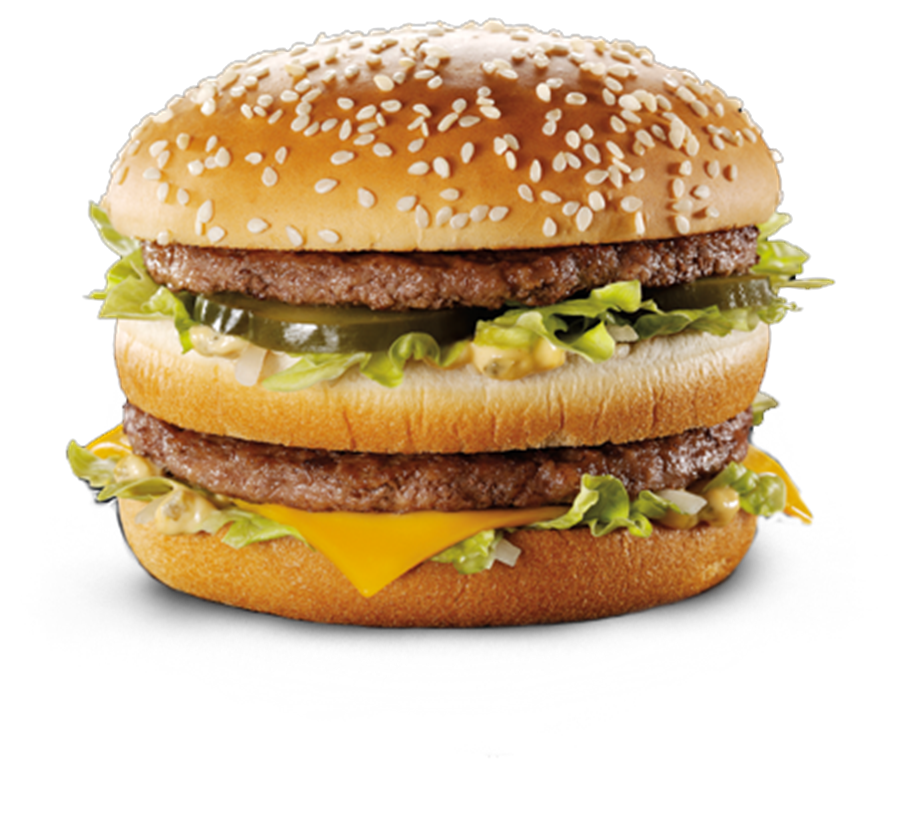
You know what a sandwich is right ? Stuff between 2 layers of bread, something like that. I thought I knew what sandwiches were too. But it was before I encountered this monstruosity:
- credits: see wikipedia
- No, wait a second. It must be a sandwich 😨. And I think I can prove it
- Axiom 1. We assume that if
||(X||) is a sandwich,||(X||) with half as much filling is a sandwich. By induction, for any||(n||) , a sandwich with||(2^{-n}||) as much filling is a sandwich. - Axiom 2. We assume that sandwiches exist. This is a non-obvious fact, but this implies that they are made of atoms. In particular, the filling is made up of a finite number of atoms.
- Axiom 3. There is at least one person on earth that know what a sandwich is, and this person is not a scientist.
- Axiom 4. A hamburger is a sandwich. This fact is trivial.
- By 1) and 2), a sandwich with one atom of filling is a sandwich.
- But then by 3), the person who knows what a sandwich is can't make the difference between this sandwich and a sandwich without filling. We just proved an important theorem: a sandwich without filling is still a sandwich
-
By 4, we know that this is a sandwich. Let's call it
||(S_3||) : - By our previous theorem, a
||(S_3||) without feeling is a sandwich. - But this is equivalent (in a strong sense) to a Toast Sandwich.
-
Now I am become Death, the Destroyer of Worlds**
The State of Research
This research is one of the uttermost importance. Generations of researcher have debated on the subject, and we only start to see the premises of a universal classification. ⚠️ This can be a very emotional and polarizing subject, so beware.- 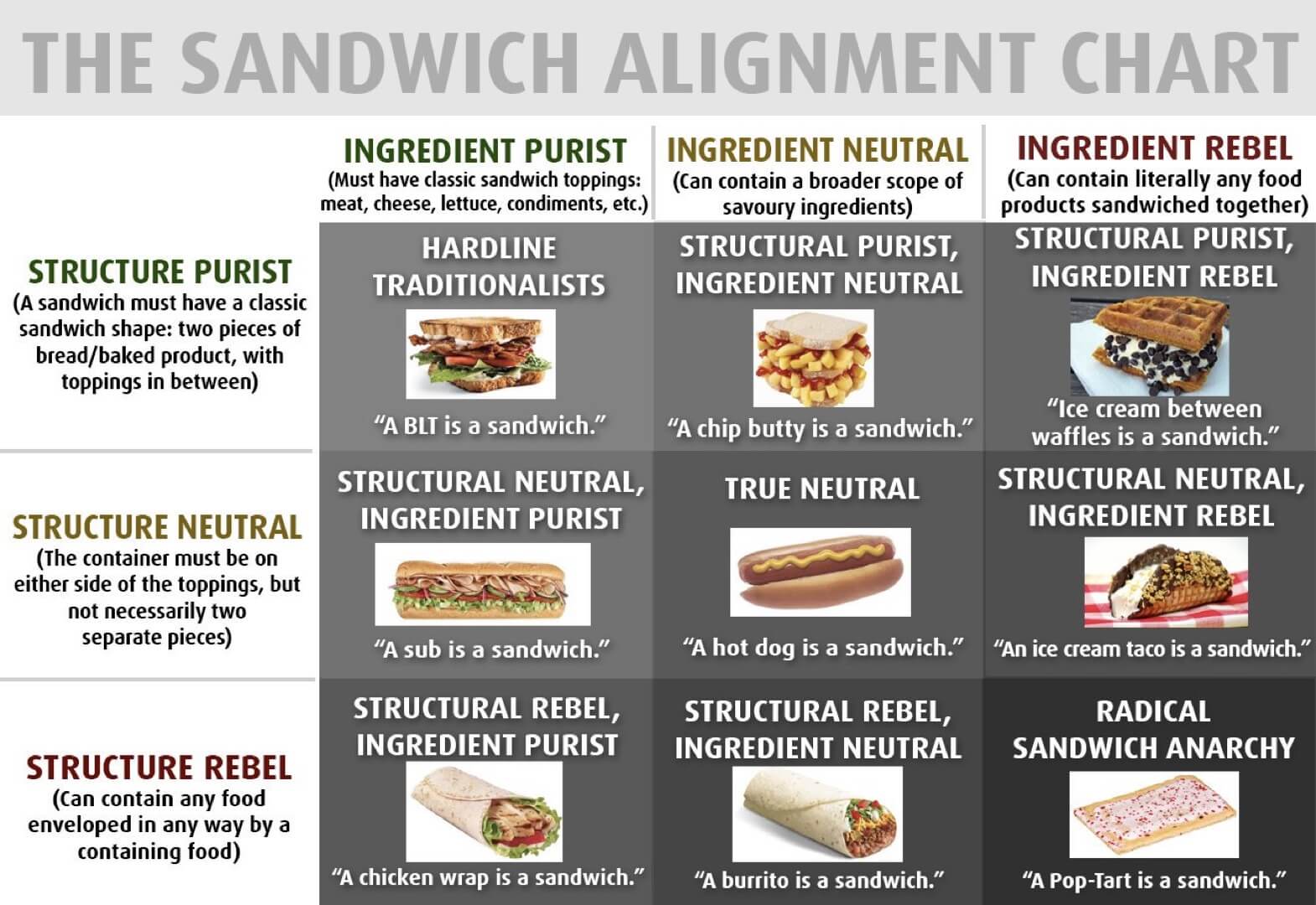
Definitions
Before I present the main theories, we need some definitions.- structural starch is anything made up mostly of long chains of glucose, and that can be hold in one hand.
- What we will refer to as salad is anything that is edible and that is not structural starch. (that's actually a simplification because of Soup, but the theory would be too complex to explain here)
- Crust is structural starch that can in theory hold salad. When it's the case, the salad is referred to as "the filling*.
- Structural starch that cannot hold salad is quite rare, but does exist. We call them candies. For example, a ripped-off pancake is a candy.
- Crust with salad does not automatically constitute a sandwich, but a proto-sandwich.
Is rice structural starch, candy or salad ?
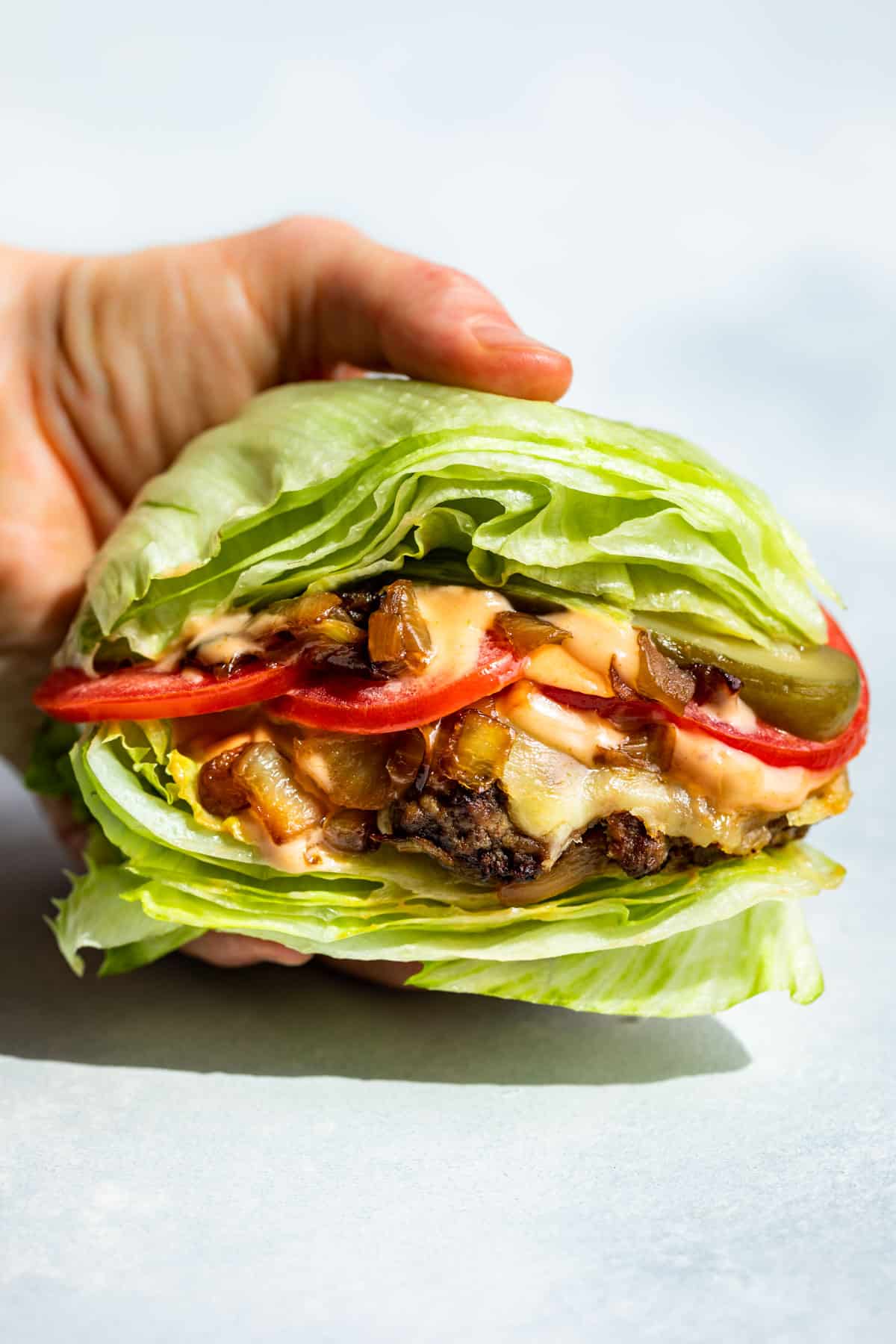
Is lettuce salad ?
What is a potato ?
Theories
The structural approach
The last successful theory was the Cube rule. It is simple, often consistent, and almost purely topolical. Unfortunately, the approach still has a number of problems.- First and foremost, an uncut "Subway sandwich" is not a sandwich but a taco. That means that you can accidentally turn a non-sandwich into a sandwich, which makes the theory unstable.
- Second, a non sandwich (a Taco) can be transformed continuously into a 1-Toast (a flat Taco), which makes the definition non-continuous.
- a Big Mac is a cake ! WTF ? It completely breaks our intuition.
- The Toast Sandwich cannot be classified with this theory, so the theory is non-universal
The topological approach
We can modify slightly the cube rule to use homology classes. To classify a sandwich, you just have to:- 1) count the number of pieces of structural starch (or Toasts)
- 3) count the maximum number of 3-dimensional holes in your sandwich Toasts (if any)
- 2) count the maximum number of 2-dimensional holes in your sandwich Toasts (if any)
-
Name Classification Notes Classical sandwich ||(2||) -sandwichtrivial Crèpe bretonne ||(1||) -sandwichobvious Taco ||(1||) -sandwichcan be unfolded to get a pancake Calzone ||(1,1||) -sandwich0 holes in the surface, but a 3d hole inside Rolled wrap ||(1,0,1||) -sandwichhomeomorphic to a pancake with a hole Bretzel Sandwich ||(2,0,3||) -sandwich2 slices of bread, that each have 3 holes - The main difference is that Quiches, Toast and Taco are now in the same category, the class "1-sandwich".
- But it starts to be interesting for more complex Toasts, like baghir (same apply for bubble-wafles):

-
Name Classification Notes Baghir ||(1,\omega||) -sandwichUncountably many 3d-holes Big M'aghir ||(3,\omega||) -sandwichThe baghir version of a Big Mac Rolled Baghir wrap ||(1,\omega,1||) -sandwicha lot of holes
The geometrical approach
As we saw, the main problem with the topological approach is that it fails to distinguish a quiche from a toast. It is still unstable: if you take your calzone and cut an extremely small part just to check it's good, you know have a 1-sandwich. We need a way to have a theory that is less unstable, while not failing to identify in-between sandwiches (what if I put guacamole on a curved chip ?) For this reason, I and some colleagues developed T.O.A.S.T, Topological Outline Analysis of Sandwich Tangents- (The name was partially found by Claude 4.5 Sonnet, credits to it)
- 1) take your differentiable proto-sandwich (it's ok if it's not differentiable for a set of points of measure 0, just ignore them)
- 2) look at all the points that are in contact with salad.
- 3) look at all the normalized tangent vector of these points.
- 4) Move the vectors back to the origin. You get a subset of
||(S_2||) (the sphere), called the core of the sandwich. And now, we can do topology ON THIS SPACE !
- The number of 0-dimensional components of the core,
||(C_0||) - The number of 1-dimensional components of the core,
||(C_1||) - The number of $2-dimensional components of the core,
||(C_2||)
- For the toast, there is one single vector tangent to salad (denoted in blue), so the core is a single point on the sphere. Thus, its signature is
||((1, 0, 0)||)